22 Jul 2026
Tracing the Lineage of Multiplier Mechanics from Classic Fruit Machines to Modern Interconnected Slot Ecosystems
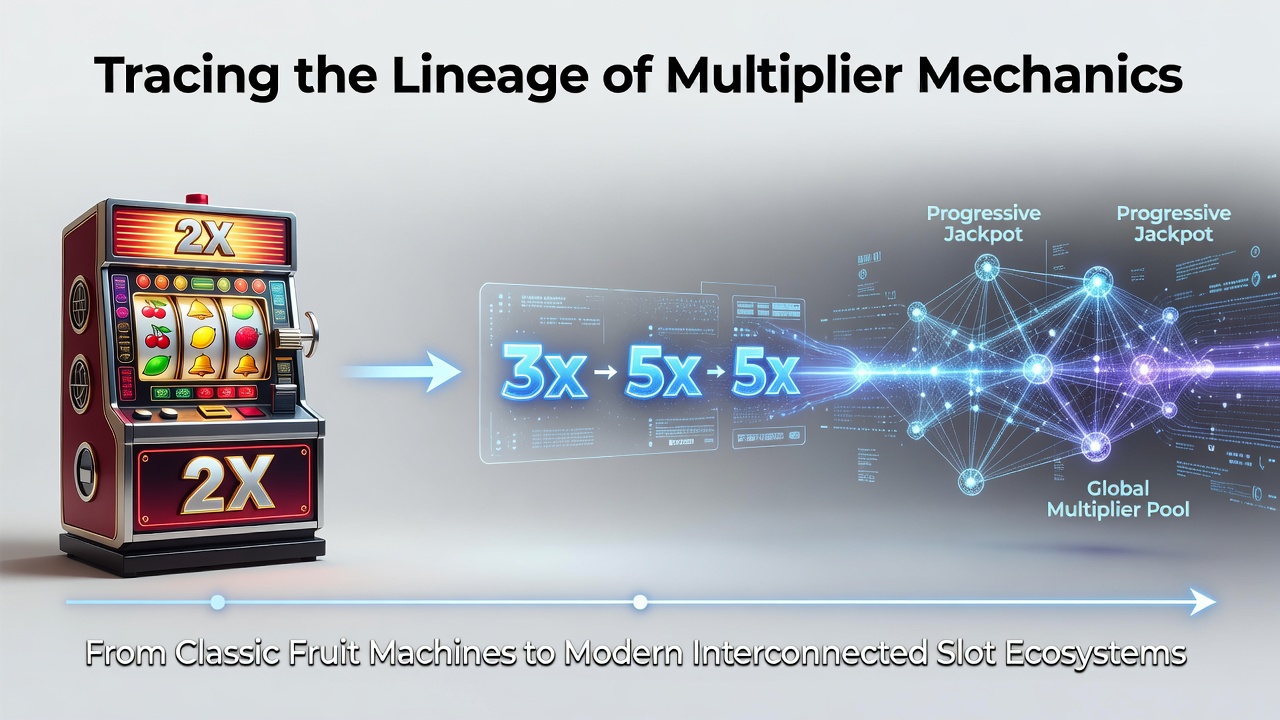 Classic fruit machines relied on fixed payout tables where certain symbol combinations delivered returns at set multiples of the stake, and operators in early 20th-century Britain and the United States installed these devices in pubs and arcades to provide straightforward entertainment with limited variation in reward structures. Mechanical reels displayed fruits, bells, and bars while a single coin or token triggered one spin, yet the underlying multiplier logic emerged through payout charts printed on the machine cabinet that scaled wins according to the number of matching symbols aligned on the payline.
Mechanical Foundations and Early Multiplier Designs
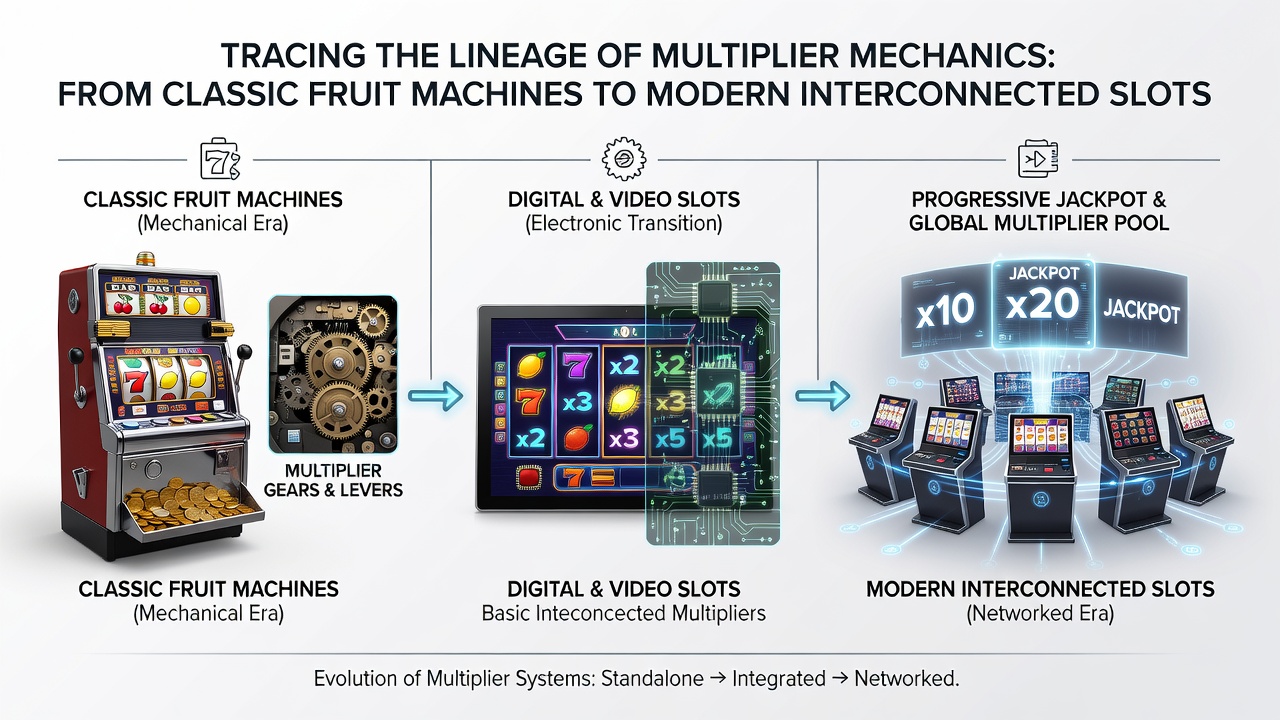
Engineers at companies such as Mills Novelty and Jennings introduced stepped payout mechanisms during the 1930s and 1940s that multiplied base awards when players inserted additional coins, and these systems created the first variable multiplier effects without electronic assistance because each extra coin activated higher tiers on the internal payout wheel. Observers note that the physical constraints of gears and levers restricted multiplier ranges to small integers, yet the approach established a design principle that later generations would expand through digital means. Data from preserved machines in museum collections shows consistent use of 2x to 5x multipliers tied directly to coin denomination selection, and this pattern persisted until electromechanical hybrids appeared in the 1960s.
Transition to Electronic and Video Formats
Electronic components replaced physical reels in the 1970s, allowing manufacturers to program multiplier values that responded to player choices and random outcomes, while video screens introduced animated sequences that visualized multiplier growth during bonus rounds. Studies from gaming technology archives indicate that the shift enabled multipliers to reach double digits because software could calculate and display escalating values without mechanical wear. Casinos in Nevada and Atlantic City adopted these machines rapidly, and regulatory filings from the Nevada Gaming Control Board document the steady replacement of mechanical units with video models throughout the 1980s.
Expansion of Feature-Based Multipliers
Bonus features added layers where multipliers accumulated across multiple spins or combined with wild symbols, and game designers integrated pick-and-click rounds that applied random multipliers to accumulated credits. Research papers on slot mathematics reveal that these mechanics increased average return-to-player volatility while maintaining house edges within acceptable regulatory bands. Manufacturers released titles that chained multipliers across progressive jackpots, and the approach spread to international markets as cabinets connected through local area networks in the 1990s.
Networked Ecosystems and Real-Time Multipliers
Wide-area progressive systems linked machines across multiple venues, and multipliers attached to shared jackpot pools grew dynamically based on collective play volume across regions. Industry reports from the American Gaming Association track the expansion of these networks from the late 1990s onward, noting that multiplier values could climb into the hundreds when linked machines contributed simultaneously. Mobile integration further extended access, and operators deployed applications that synchronized player accounts with central servers so multipliers carried across sessions and devices.
Blockchain and Distributed Ledger Integration by 2026
Distributed ledger technologies entered slot architectures around 2023, and automated multiplier releases triggered through smart contracts became testable under frameworks monitored by authorities such as the Malta Gaming Authority. As of July 2026, several platforms reported live deployments where multiplier values adjusted according to transaction volume recorded on public chains, and compliance documentation shows these systems maintained deterministic outcomes while satisfying audit requirements. European Gaming and Betting Association publications describe ongoing trials that map regulatory thresholds to multiplier trigger conditions across interconnected terminals.
Current Technical Patterns in Interconnected Environments
Modern terminals calculate multipliers through layered algorithms that combine base game results with contributions from linked machines, and cloud-based servers distribute updated values to every participating cabinet within milliseconds. Technical specifications published by major suppliers document the use of application programming interfaces that allow third-party bonus systems to apply additional multipliers without altering core reel logic. Players encounter cascading reel setups where each successive win applies an incremental multiplier that persists until the feature concludes, and aggregated data from operator networks confirms higher engagement metrics when these mechanics operate across geographic clusters.
Conclusion
The progression from fixed mechanical multipliers to dynamic, network-driven systems follows a continuous line of engineering refinement driven by advances in electronics, software, and connectivity standards. Regulatory bodies across multiple jurisdictions continue to evaluate how these evolving mechanics interact with responsible gaming parameters, and manufacturers release updated platforms that preserve historical payout principles while incorporating new layers of multiplier functionality. The lineage remains visible in contemporary designs that still reference classic fruit symbols and simple multiplier tables even as the underlying infrastructure connects thousands of terminals into unified ecosystems.