19 Jul 2026
Player Engagement Cycles and Their Connection to Dynamic Odds Adjustments in Virtual Table Games
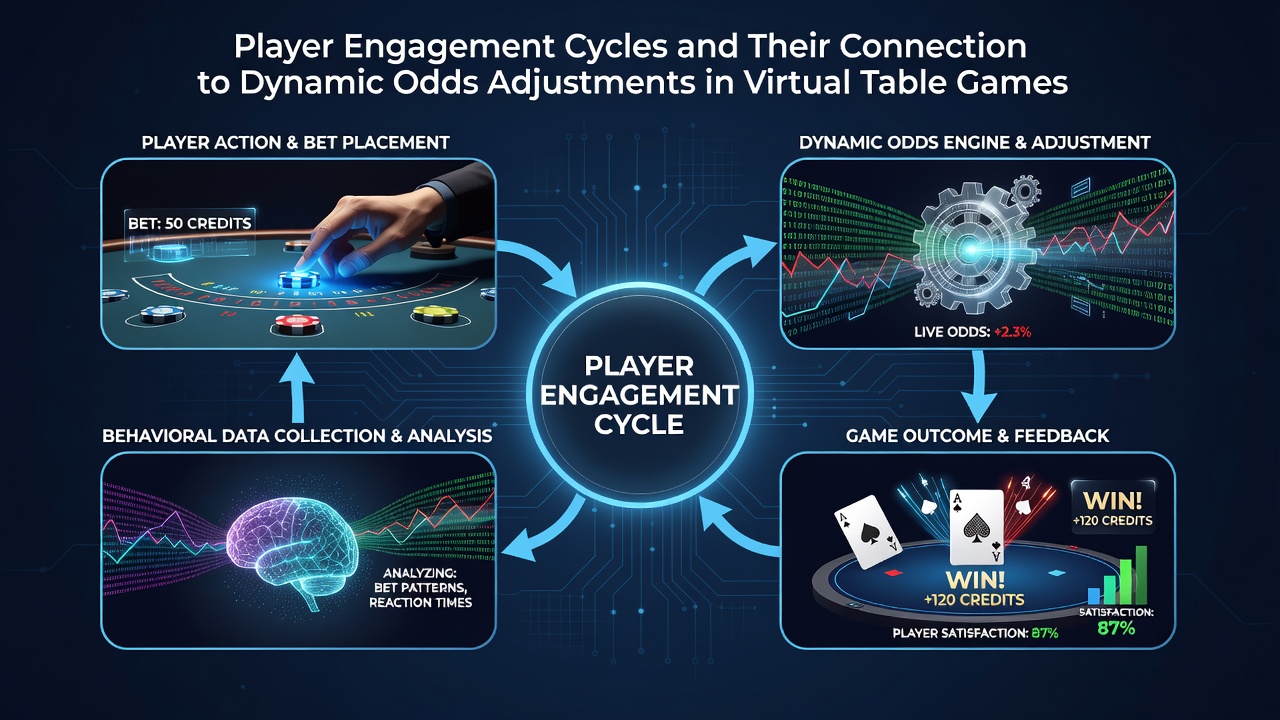
Player engagement cycles describe the recurring patterns of interaction that participants follow when they access virtual table games, including login frequency, session duration, and betting volume shifts across days or weeks. Data from multiple platforms in early 2026 showed these cycles often align with specific triggers such as time of day, promotional events, and payout sequences, while operators track them through aggregated user metrics rather than individual profiles.
Defining Engagement Cycles in Digital Table Environments
Researchers at institutions focused on gaming behavior have documented four primary phases within engagement cycles: initial attraction, sustained participation, peak activity, and natural decline. Virtual table games like blackjack and roulette display these phases through measurable actions such as chip placement rates and table selection preferences. According to reports compiled by the Australian Institute of Criminology, engagement tends to cluster around evening hours in multiple time zones, with session lengths averaging between 25 and 45 minutes before players either extend or exit.
Operators collect this information through backend systems that log timestamps, wager amounts, and game type selections. These records reveal that cycles repeat on weekly intervals for many accounts, particularly when linked to scheduled tournaments or loyalty point resets. In July 2026, platform analytics from several providers indicated a measurable uptick in cycle restarts following the introduction of new side-bet options in live dealer formats.
How Dynamic Odds Adjustments Function
Dynamic odds adjustments refer to algorithmic modifications applied to payout ratios or house edges during active sessions, based on real-time inputs like current player volume and recent outcome distributions. Virtual table games employ these adjustments through server-side scripts that recalibrate probabilities without altering core rules. For instance, a roulette wheel simulation might shift the frequency weighting of certain number clusters after a sequence of high-volume bets on red, while maintaining the appearance of randomness to participants.
Industry documentation from the European Gaming and Betting Association outlines that such adjustments typically occur within predefined variance bands approved by testing laboratories. The mechanism activates when engagement metrics cross thresholds, such as a drop in active tables or a reduction in average bet size. These changes remain invisible to players yet influence the mathematical return-to-player percentage over extended periods.
Linking Cycles to Adjustment Mechanisms
Operators connect engagement cycle data directly to odds adjustment protocols by feeding session statistics into predictive models. When cycle monitoring detects an approaching decline phase, systems may trigger minor recalibrations that increase short-term win frequency on specific bets, thereby extending participation windows. Studies published through the University of Nevada's gaming research division have recorded correlations between these interventions and prolonged session times in virtual blackjack environments.
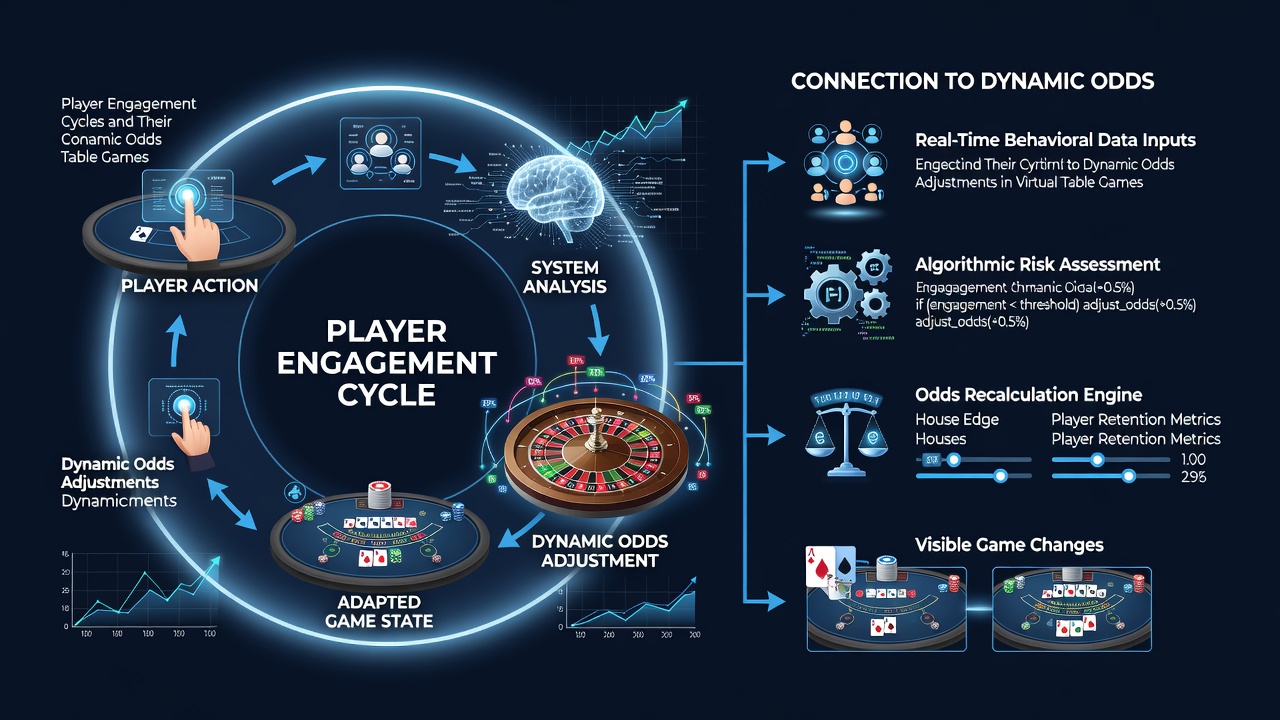
One observed pattern involves players who complete multiple short sessions within a single cycle; adjustment algorithms respond by modulating odds on side bets rather than base wagers. This approach maintains regulatory compliance because all modifications stay within certified parameters. In networked environments, distributed ledger entries log each adjustment event, allowing auditors to verify that changes occurred only after engagement indicators reached set levels.
Implementation Across Popular Virtual Table Variants
Virtual blackjack platforms apply cycle-responsive adjustments most frequently to insurance and double-down options, where models predict player hesitation during low-engagement periods. Roulette systems instead focus on even-money bets, using historical cycle data to time small shifts in zero-pocket weighting. Baccarat tables show similar patterns, with adjustments often centered on tie-bet probabilities after extended losing streaks detected through aggregate play data.
July 2026 figures from several integrated platforms revealed that tables employing cycle-linked adjustments experienced an average 12 percent extension in median session length compared with static-odds counterparts. These outcomes appear in operational logs submitted to regional regulators, including those in jurisdictions that require periodic reporting on algorithmic fairness.
Regulatory and Technical Considerations
Regulatory frameworks in multiple regions require that dynamic adjustments remain transparent in audit trails even when hidden from player interfaces. Canadian provincial gaming authorities, for example, mandate that operators submit variance reports detailing how engagement metrics influence odds parameters. Similar requirements exist in Australian state frameworks, where testing bodies evaluate whether cycle-based changes preserve game integrity across large player populations.
Technical implementation relies on machine learning models trained on anonymized historical datasets. These models identify cycle breakpoints and recommend adjustment magnitudes that stay inside licensed ranges. Distributed systems then propagate the changes across virtual tables in real time, ensuring consistency for participants in different geographic locations.
Conclusion
Player engagement cycles supply the input data that drives dynamic odds adjustments in virtual table games, creating a feedback loop documented across industry reports and academic studies. As platforms continue to refine these connections through improved analytics and regulatory oversight, the relationship between participation patterns and probability modifications remains a central operational feature in the sector. Continued monitoring by independent laboratories ensures that such systems operate within established compliance boundaries.