3 Jun 2026
How Certification Protocols Influence Wagering Thresholds in Games With Cascading Reel Mechanics and Tiered Deposit Incentives
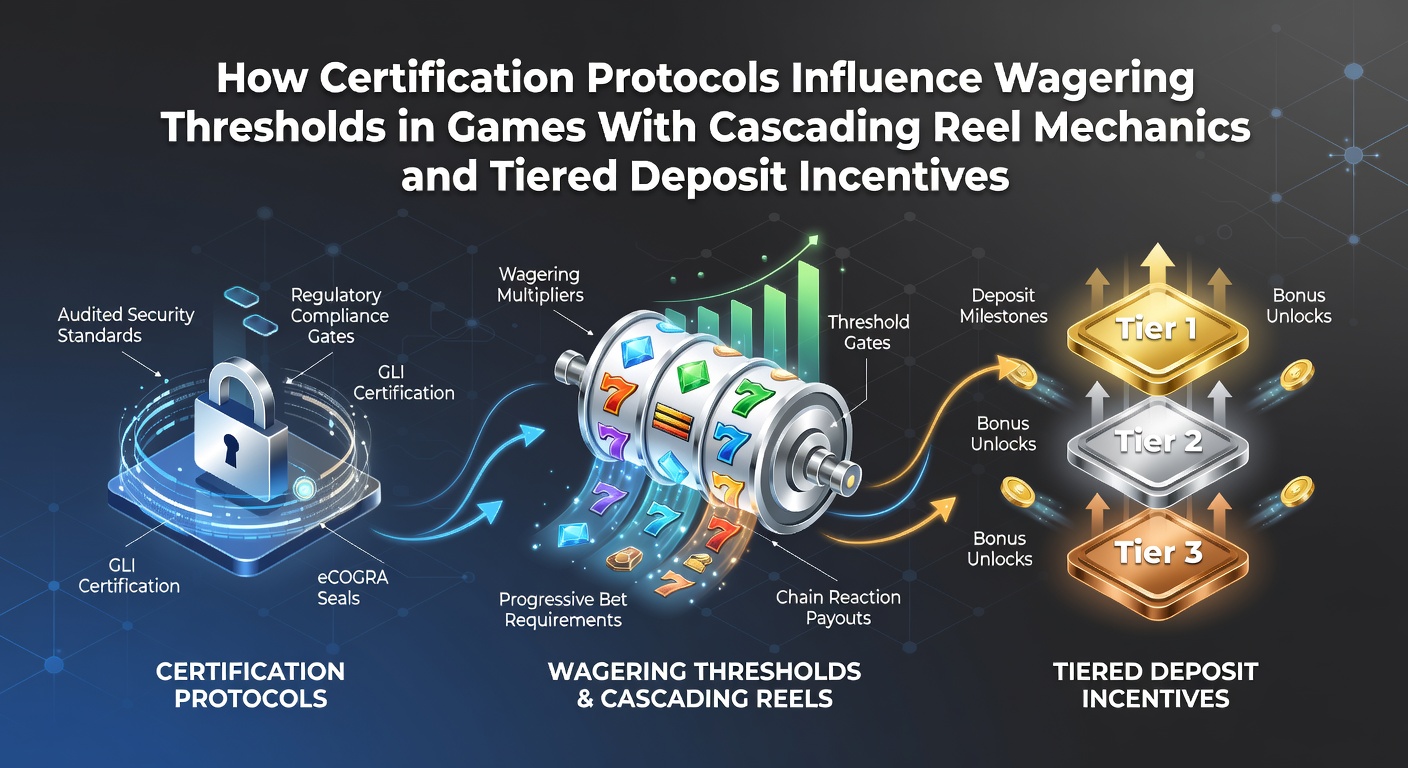
Certification protocols establish standardized verification processes for game software and random number generators that directly shape how operators calculate wagering thresholds in titles featuring cascading reel mechanics. These protocols come from independent testing laboratories that examine payout percentages, symbol distribution patterns, and bonus trigger frequencies before any title receives approval for regulated markets. Once certification clears a game, operators gain precise data on volatility profiles that inform minimum playthrough requirements attached to tiered deposit incentives.
Certification Standards and Their Core Components
Independent laboratories apply rigorous evaluation criteria that cover both base game functionality and the additional layers introduced by cascading sequences where winning symbols disappear and new ones drop into place. Data from these evaluations reveals average spin durations, hit frequencies, and multiplier accumulation rates that occur during extended cascades. Operators then incorporate these figures when determining the total wager amount needed to unlock bonus funds from multi-tier deposit structures. Research conducted by testing firms shows that games with frequent cascade chains often carry higher variance readings which prompt adjusted thresholds to maintain balanced risk exposure across player deposit levels.
Cascading Reel Mechanics and Volatility Calculations
Cascading reel designs create sequences of consecutive wins within single spins that increase overall game volatility compared with traditional static reel formats. Certification reports document these sequences through millions of simulated spins that track how often large multiplier chains develop. The resulting volatility index helps determine whether a game requires elevated wagering thresholds for higher deposit incentive tiers. In June 2026 several markets began requiring updated certification documentation that includes cascade-specific metrics before operators could promote tiered bonuses on these titles. This requirement ensures that playthrough calculations reflect the actual mathematical distribution of wins rather than estimates derived from older non-cascading models.
Tiered Deposit Incentives and Adjusted Requirements
Tiered deposit structures offer progressively larger bonus percentages or free spin packages as player deposits increase across defined brackets. Certification data feeds directly into the formulas operators use to set distinct wagering multiples for each tier. Lower deposit brackets typically receive modest thresholds while higher tiers carry scaled requirements that account for the increased bonus value and the elevated variance present in cascading mechanics. Observers note that this tiered approach allows operators to distribute risk across different player segments while remaining compliant with certified game parameters.

Regulatory Integration Across Jurisdictions
Regulatory bodies in multiple regions incorporate certification findings when reviewing operator bonus terms. The New Jersey Division of Gaming Enforcement requires submission of laboratory reports alongside bonus structure filings so that wagering thresholds align with verified game data. Similar practices appear in Australian state frameworks where cascade frequency statistics influence the maximum playthrough multiples permitted on promotional offers. These aligned approaches create consistency between certified game performance and the deposit incentive conditions presented to players.
Impact on Operator Compliance Processes
Operators maintain internal review systems that cross-reference certification certificates with bonus configuration tools. Any change to a cascading title's certified parameters triggers recalculation of thresholds across all deposit tiers. This process prevents mismatches between advertised incentives and the actual mathematical expectations established during laboratory testing. Industry reports from organizations such as the European Gaming and Betting Association highlight how these verification loops reduce instances of non-compliant bonus promotions in markets with active cascading game portfolios.
Future Developments in Certification Practices
Testing laboratories continue to refine evaluation methods that isolate cascade chain contributions to overall return-to-player percentages. Updated protocols scheduled for broader adoption after June 2026 will require separate reporting on bonus round cascade behavior when such features interact with tiered deposit incentives. These enhancements aim to provide operators with even more granular data for threshold setting while maintaining regulatory transparency across different deposit levels and game formats.
Conclusion
Certification protocols supply the foundational data that determines wagering thresholds in cascading reel games paired with tiered deposit incentives. The verified metrics on volatility, hit rates, and sequence frequency enable operators to construct compliant bonus structures that reflect actual game mathematics. Regulatory frameworks in various jurisdictions reinforce this connection by mandating alignment between laboratory findings and promotional terms. As testing standards evolve, the relationship between certification outcomes and incentive design continues to shape how these game elements function within regulated environments.